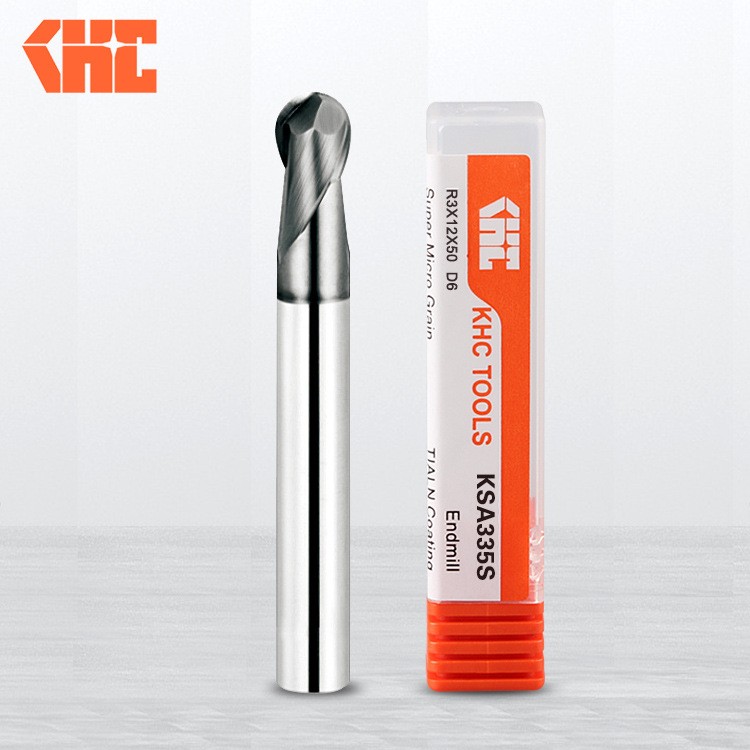
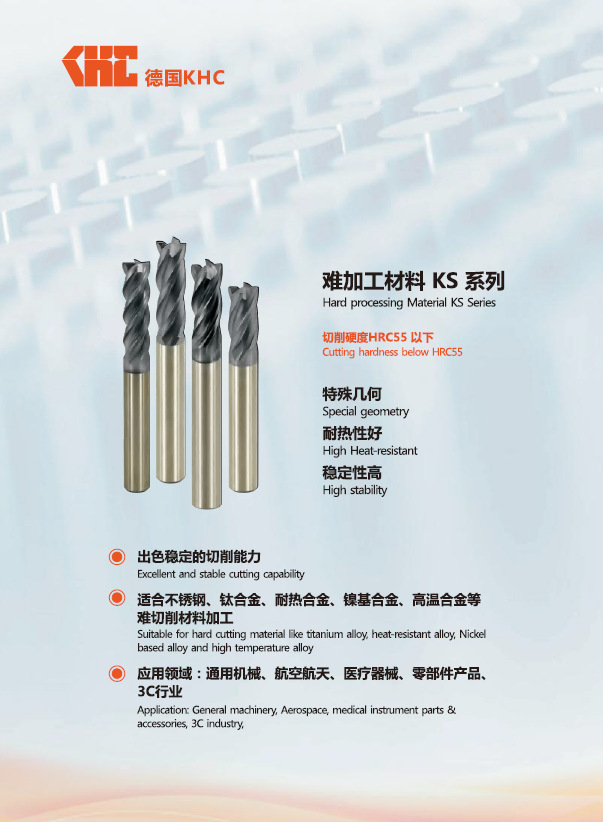
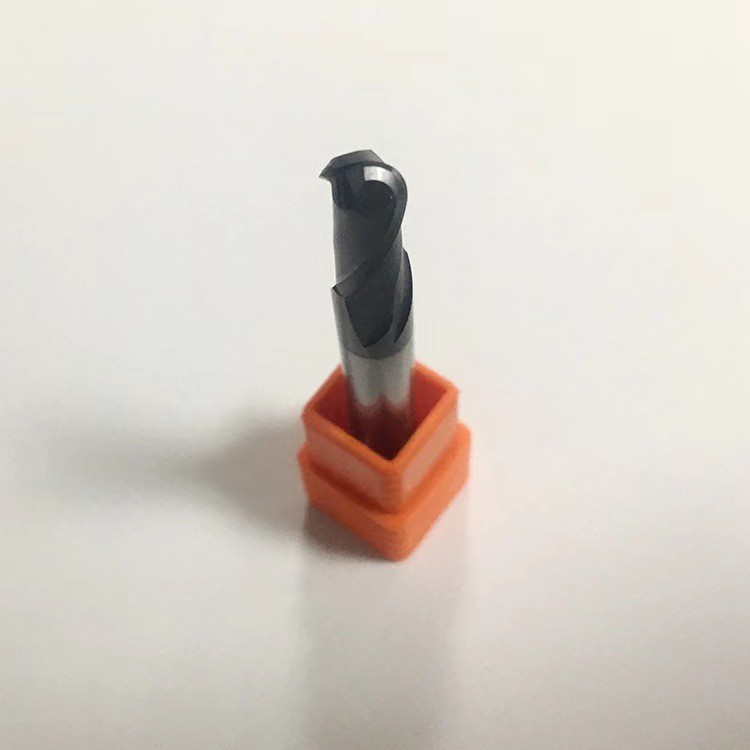
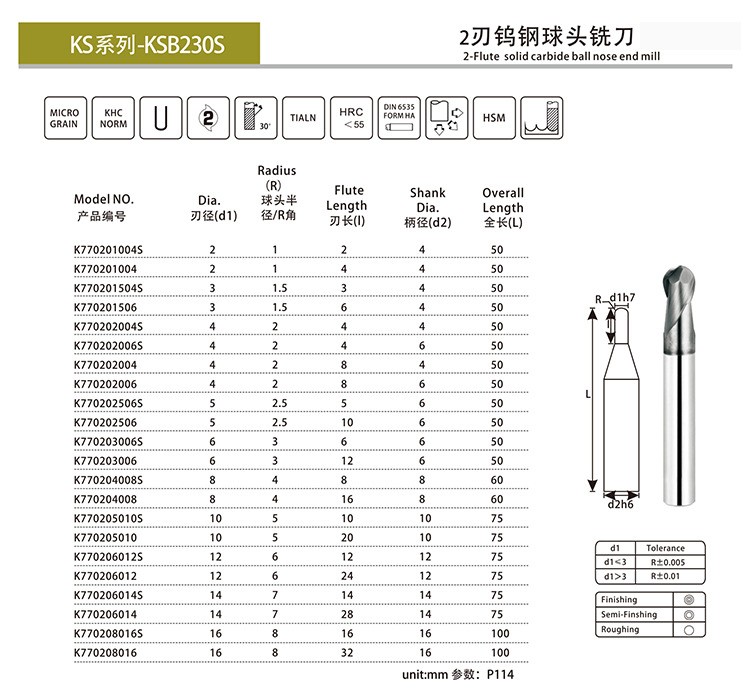


Essential details
MOQ:100
Lead time:3-5day
Shipping:Express Delivery
Product Introduction


Q1: Why is the use of a “2-flute” ball end mill so crucial for machining stainless steel?
A: Stainless steel (particularly austenitic types like 304 and 316) generates sticky chips and has poor thermal conductivity. The 2-blade design provides the largest chip-holding capacity, ensuring that chip removal is absolutely smooth. This effectively prevents the formation of chip buildup, tool sticking, and blade breakage caused by poor chip removal, which is the first critical factor for successful machining. While 4-blade knives have good rigidity, they are prone to clogging with chips, making them more risky.
A: Stainless steel (particularly austenitic types like 304 and 316) generates sticky chips and has poor thermal conductivity. The 2-blade design provides the largest chip-holding capacity, ensuring that chip removal is absolutely smooth. This effectively prevents the formation of chip buildup, tool sticking, and blade breakage caused by poor chip removal, which is the first critical factor for successful machining. While 4-blade knives have good rigidity, they are prone to clogging with chips, making them more risky.
Q2: What type of coating is most suitable for stainless steel processing?
A: The preferred option is PVD (Physical Vapor Deposition) coatings, particularly AlTiN (titanium nitride), AlCrN (aluminum chromium nitride), and their variants (such as those with silicon added). These coatings have high hardness, low friction coefficients, and high resistance to oxidation. They effectively reduce the adhesion between stainless steel and cutting tools, shield against cutting heat, and significantly enhance wear resistance. Ordinary TiN coatings should be avoided.
A: The preferred option is PVD (Physical Vapor Deposition) coatings, particularly AlTiN (titanium nitride), AlCrN (aluminum chromium nitride), and their variants (such as those with silicon added). These coatings have high hardness, low friction coefficients, and high resistance to oxidation. They effectively reduce the adhesion between stainless steel and cutting tools, shield against cutting heat, and significantly enhance wear resistance. Ordinary TiN coatings should be avoided.
Q3: Why is a “ultra-fine particle” hard alloy matrix required?
A: Ultra-fine/submicron particle hardmetal retains high hardness and wear resistance while exhibiting significantly superior toughness compared to regular particles. When machining stainless steel, the cutting edges must withstand microscopic impacts caused by material inhomogeneity and pustules. A more resilient base material can better resist cracking, achieving a balance between “sharpness” and “tenacity.”
A: Ultra-fine/submicron particle hardmetal retains high hardness and wear resistance while exhibiting significantly superior toughness compared to regular particles. When machining stainless steel, the cutting edges must withstand microscopic impacts caused by material inhomogeneity and pustules. A more resilient base material can better resist cracking, achieving a balance between “sharpness” and “tenacity.”


